I don’t remember my parents ever talking to me about the right to vote when I was growing up.
(That doesn’t mean my parents didn’t care—my parents care deeply about our country and her governors. They vote and they advocate to this day.)
Just the other day I was sitting in a coffee shop having a conversation with a friend of mine. The conversation landed on politics for a moment and she said something that really resonated with me—it was one of those moments in my privileged whiteness where I came face-to-face with the weight of what people of color carry in America.
While we were talking my friend told me that her mother always taught her that my friend was obligated to vote because too many people died for her right to do so.
We all know the story of Selma but how often do white people really think about people of color dying for the right to vote? I know my high school history book didn’t talk about it. The right to vote was granted to black people in 1870. But yet so many states found ways around that—poll taxes, literacy tests, the grandfather clause, etc. People of color were dying for the right to vote well into the 60s when poll taxes were abolished in 1964 and the Voting Rights Act was passed in 1965.
Raise your hand if you have ever heard of Rev. George Lee.
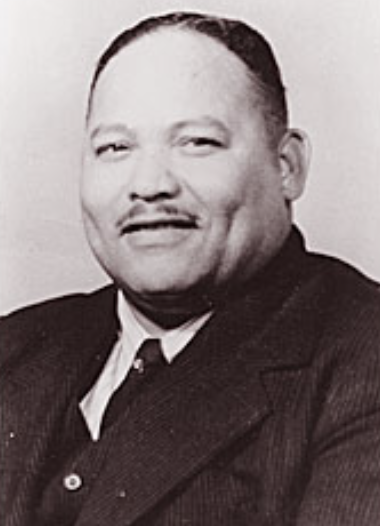
According to the Southern Poverty Law Center Rev. George Lee was one of the first black people registered to vote in Humphreys County, Mississippi. Rev. Lee encouraged others to vote via his preaching and his printing press. The SPLC says, “White officials offered Lee protection on the condition he end his voter registration efforts, but Lee refused…” Rev. Lee was murdered on May 7, 1955, in Belzoni, Mississippi. (SPLC)
And my guess would be that you never studied Lamar Smith in your high school history class. I know I didn’t.

Mr. Smith was a local civil servant, organizing black voters. Mr. Smith lost his life on Aug. 13, 1955, in Brookhaven, Mississippi. He was shot and killed in front of a courthouse in daylight. Dozens of people witnessed a white man kill Mr. Smith but an indictment never happened because no one would ever admit they saw this white man murder Mr. Smith. (SPLC)
And Herbert Lee?
Mr. Lee died on Sept. 25, 1961, when he was murdered by a state legislator. The SPLC reports that Mr. Lee worked with civil rights leader Bob Moses. They were registering black voters. The legislator said he was defending himself and never arrested. A black witness was killed later. (SPLC)
These are just a few stories. The SPLC has a Civil Rights Martyrs page and you can read story after story like those of Rev. Lee, Mr. Smith, and Mr. Lee.
I was thankful for my conversation with my friend the other day because I heard her say something I had never really considered. When you listen your empathy increases and you understand one another so much better.
Perhaps that’s what we need more of in America right now when it comes to race—listening and empathy.
Listen and Understand
The word listen as a verb means to give one’s attention to a sound. The word understand means to grasp the significance, implications, or importance of.

Imagine if you’re sitting across the table from someone sharing your deepest thoughts, emotions, experiences. What would you expect from that person during that exchange? I know I would hope that he or she really listened to me. I would hope he or she would fully engage in grasping the significance of what I was saying. I would hope that person would walk away from the conversation thinking about how I was feeling and why I was feeling that way. Perhaps he or she would then do some followup on what I said through research or investigation.
Over the last few years I have read books by people of color and talked with people of color about this topic of race. And one thing I have consistently read and heard is the word listen. Don’t you just wish that some people would listen, like really listen? Like really really really hear you? If we listened to understand so much of our race problem would probably diminish or at least start to diminish.
Seek first to understand, then to be understood.
Stephen R. Covey
The thing is that when you are sharing with someone you know that what you are saying is your truth. Every emotion running through your body is real to you. Every experience you have had in your life has brought you to where you are now and none of those experiences were pretend. Even though no one else may have lived those experiences with you they are real. So real and you’re just desperate for someone to get it.
Hopefully by now you know where I’m going.
Try to understand men. If you understand each other you will be kind to each other. Knowing a man well never leads to hate and almost always leads to love.
John Steinbeck
I’m a mama because of adoption. And over the last several years that I have been a mama many people have not understood the way I parent. It’s different—it has to be different. And I am just speechless sometimes that people assume they know what reality is when it comes to my parenting. But every single time this happens I think, “well, this person hasn’t really listened to me. They don’t understand what our family deals with day-in and day-out due to early childhood trauma.”
This experience of motherhood has taught me to really listen, to really try to understand others and to respect their experiences.
I have sat across the table from people of color many times over the years and have talked about racial inequalities and injustices. I have heard stories of black boys receiving consequences in school far more for the same behavior than their white peers. I have listened to black mothers share about the talks they have had with their sons about not playing with toy guns outside. I have listened to mothers tell stories about the racism their sons and daughters have received at school.
Having these conversations taught me that the racial tensions in America have not been made up by the media. These tensions are real for so many. So many mamas, myself included, go to bed at night thankful their black son made it home alive tonight.
It’s so important to hear people speaking to you and really try to understand their emotions. It makes all the difference.
Empathy
Empathy can be simply defined as the ability to understand and share the feelings of another. We listen, we understand, and we share.
In the Feb. 22, 2019 Washington Post perspective piece Why Empathy is the Key to Dismantling White Racism historian and author Susan Lanzoni says, “Indeed, the lack of empathy on the part of white Americans has long impeded the fight for racial equality.”
Near the end of her article Lanzoni writes, “To understand someone different from us, we have to change ourselves.”
We have to be willing to dive into an uncomfortable conversation and learn from one another. We have to be willing to do some heart work.
In the spring of 2018 a seventh grade black student wrote to the New York Times about how to talk to her white best friend who often says, “It’s not my fault I’m white.”
With much wisdom, the New York Times writer’s response included this, “We can keep avoiding the tough conversations about race that we still desperately need to have. But doing better means listening to our friends and neighbors with open hearts, including when we feel guilty and even when we’re in the wrong. (Being wrong just gives us another chance to apologize and get it right.)”
“But doing better means listening to our friends and neighbors with open hearts…”
Let’s do better. Let’s open our hearts. And let’s listen.
I’m so glad I listened to my friend the other day. She opened my mind and reminded me that voting is a profound honor not to be taken for granted.
Over the next four weeks of this series I will try to share some things I have heard while listening. I will invite other people to join the conversation so we may listen to them. I hope you will continue to join us. These lessons are far too important.
Coming up next week: A conversation with an advocate for racial justice
 Mama Frazzled
Yes! I’ve been waiting for this piece and you did not disappoint!
Ever since I was a little boy I can remember my mom taking me to the voting booth to watch her vote. Local and national politics, it didn’t matter! If there was a public vote, we were there.
She would always remind me that our ancestors fought and died for our right to vote and that not voting is disrespecting their sacrifices. I’m only 27, but I was in the voting booth when my mom voted in 2000, 2004, & in 2008.
I finally got my chance to vote in 2012, and I was extremely blessed to make my first vote for the first ever biracial president in American history. Thank you for sharing this piece because too many of our sacrifices go unnoticed.
LikeLike
Thank you so much for reading and sharing a little bit of your story. I hope you’ll continue to read this series and share your experiences. Standing with you and thankful for the sacrifices people of color have made over the years. It’s important to learn about those sacrifices.
LikeLike
Of course! We need more voices like yours in your coumminty so PLEASE, PLEASE keep writing, and fighting the good fight!
LikeLike